In 2026, the era of "isolated tools" is over. We have entered the age of Hyperautomation—a state where every decouplable business process is not only automated but orchestrated by intelligent agents. At Appspine, we’ve seen that the most competitive firms are no longer just using AI to write emails; they are deploying "Action Engines" that manage entire departments with minimal human oversight.
1. From "Static Rules" to "Reasoning Agents"
Traditional automation (RPA) relied on rigid scripts. If a single variable changed, the process broke. In 2026, Agentic AI has solved this.
- Context-Aware Execution: Modern agents understand intent. If a customer requests a refund, the agent doesn't just follow a flowchart; it analyzes the customer’s history, checks inventory levels, and decides whether to issue a credit or a replacement based on real-time business logic.
- Self-Healing Workflows: When a software API updates or a data format changes, 2026 automation systems use "Reasoning Loops" to identify the break and suggest a fix autonomously, reducing IT maintenance by up to 60%.
2. The Rise of "Zero-Touch" Operations
We are seeing a massive shift toward "Zero-Touch" processes in high-volume departments.
- Finance & AP: According to 2026 benchmarks, 80% of top-tier firms have achieved Zero-Touch Invoice Processing. AI agents ingest the invoice, verify it against the PO, flag anomalies, and schedule the payment without a single human click.
- HR & Onboarding: Autonomous HR agents now handle the entire lifecycle of a new hire—from initial sourcing and technical screening to setting up their payroll and hardware on day one.
- Customer Service: We’ve moved beyond chatbots. Autonomous Support Agents now resolve end-to-end issues, such as rerouting a lost package or troubleshooting a technical bug, by interacting directly with the company’s backend systems.
[Image: The Automation Evolution: Manual (Pre-2020) → RPA/Rules (2022) → Agentic Orchestration (2026)]
4. India’s Leadership in the Automation Surge
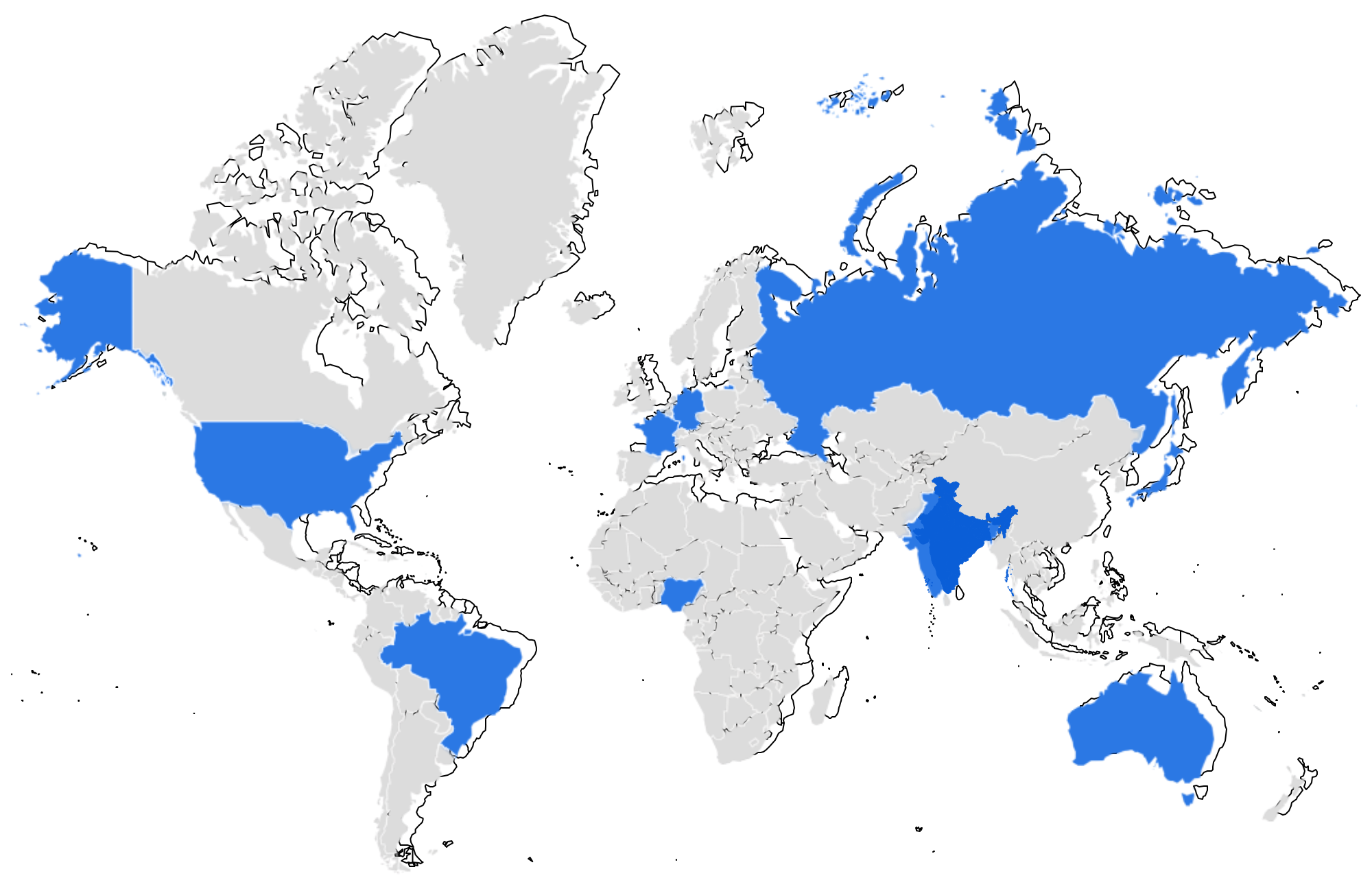
India has emerged as a global leader in the 2026 AI transition. Recent reports from Lenovo and IDC show that 99% of Indian organizations are increasing their AI investments, with an average budget growth of 19%—the highest in the Asia-Pacific region.
- The Skills-First Workforce: The Indian labor market is shifting from "headcount" to "outcome." Professionals who can orchestrate these automated systems are commanding 30% higher salaries than those who perform the tasks manually.
- SME Democratization: Low-code/No-code automation platforms have allowed small Indian businesses to compete with global giants by automating their supply chains and customer outreach for a fraction of the traditional cost.