As of March 2026, the global economy is no longer just "curious" about AI—it is fueled by it. The IMF’s latest 2026 update highlights that global growth has remained resilient at 3.3%, largely due to a surge in AI-related investment. At Appspine, we see that the narrative has shifted: it's no longer about a generic "productivity boost" but about the specialized Agent-as-a-Service economy that is re-engineering how value is captured across borders.
1. The $527 Billion Capex Wave
The most visible driver of the 2026 economy is the sheer volume of capital being poured into the "AI Factory."
- Hyperscale Investment: According to Goldman Sachs, major tech players are expected to spend over $527 billion on AI infrastructure in 2026 alone. This spending now equates to nearly 1% of global GDP, a level comparable to the peak of the 1990s telecommunications boom.
- From Chips to Power: The economy has hit a "Gigawatt Ceiling." In 2026, access to electrical power is as valuable as capital, with data center energy consumption jumping 175% since 2023.
2. India: The Engine of Global Growth
A standout feature of the 2026 economic landscape is India’s dominance.
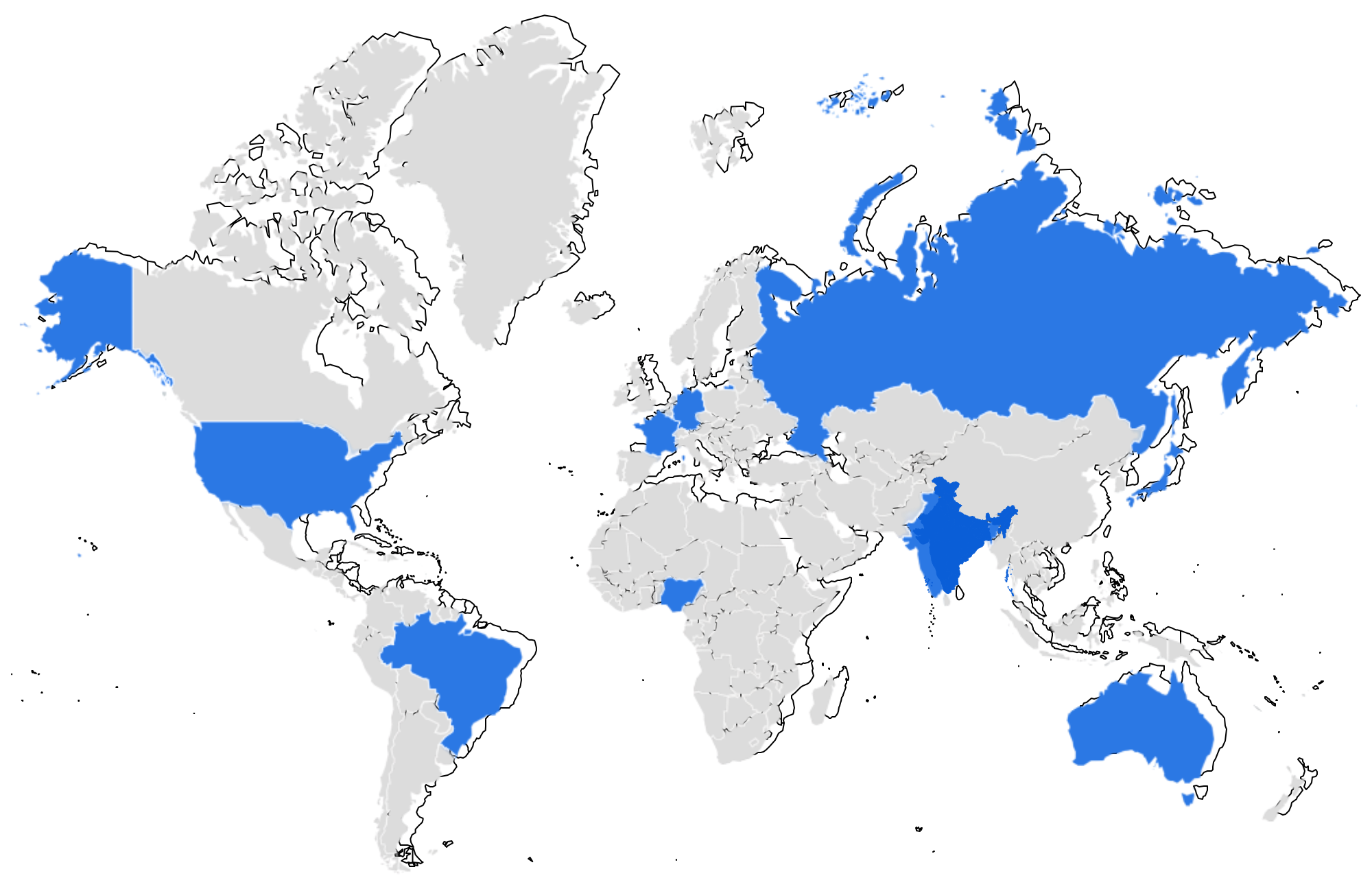
- 17% Growth Contribution: The IMF predicts that India will contribute a staggering 17% to global real GDP growth in 2026. This is fueled by India’s evolution from a service-hub to an AI-Native Software Development powerhouse.
- The SaaS Advantage: At Appspine, we are witnessing small, high-tech Indian teams using Agentic AI to outperform global competitors, effectively bringing "corporate might" to lean startup structures.
3. The Shift to the "Agentic Operating System"
The 2026 economy is characterized by a shift in how software is sold and used.
- Outcome-Based Billing: We are moving away from monthly subscriptions toward Token-Based Billing. Companies now charge based on the actual work performed by their "human-orchestrated fleets" of specialized agents.
- Personal Agent Economy: The rise of autonomous personal agents—capable of rebooking flights, managing calendars, and handling logistics without human input—is creating a new "Zero-Touch" consumer market worth billions.
[Image: Global GDP Contribution 2026—India (17%), USA (9.9%), Indonesia (3.8%)]
5. Risk and the "AI Bubble" Reckoning
Despite the growth, 2026 is also a year of consolidation. MIT Sloan and PwC experts warn that the "individual productivity" phase of AI is hitting a plateau. To sustain value, the global economy is transitioning to Enterprise-Wide AI, where leadership moves away from "exploratory" pilots and toward centralized "AI Studios" that focus on high-ROI, mission-critical workflows.